Currently fixed on the first single “Get Lucky” from Daft Punk’s new album “Random Access Memories”
Sounds Like: The soundtrack to a futuristic 70’s porn movie
Enjoy while: Kicking back at an intimate sexy house party in The Hills at 3:00am
Currently fixed on the first single “Get Lucky” from Daft Punk’s new album “Random Access Memories”
Sounds Like: The soundtrack to a futuristic 70’s porn movie
Enjoy while: Kicking back at an intimate sexy house party in The Hills at 3:00am

New Zealand has become the 13th country in the world to legalize same-sex marriage and the first in the Asia-Pacific region. On Wednesday night, the New Zealand parliament, backed by Prime Minister John Key voted on a bill to amend the 1955 Marriage Act.
New Zealand joins the following countries who recognise same-sex marriage:
Netherlands, Belgium, Canada, South Africa, Argentina, Spain, Portugal, Norway, Sweden, Denmark, Iceland and Uruguay.
More information click here.
Do you think that New Zealand’s bill amendment will encourage other countries in the region to follow suit?
Note: The original Marriage Act that was amended on Wednesday was the 1955 Marriage Act, not the 1995 Marriage Act as originally reported.

Gay marriage should be legal. Period. But in the struggle for equality it’s important not to lose sight of the blessings we’ve been afforded as gay men.
When I was coming to terms with my sexuality I often wondered if there were any benefits to being gay as opposed to being straight. Sure, some might argue that sex is easier to come by or that gay men don’t have children so they have more money for themselves but neither one of these arguments convinced me. What finally helped me accept that being gay wasn’t all that bad was the realisation that society’s plan for what constituted a normal life did not apply to me. All around me, people were expected to date, go to college, find someone to marry, commit to a career, have children, buy a house, either stay married or divorce, retire and then die. This expectation of life was terrifying to me as I wanted to travel and meet new people and live in different cities and explore and have various sexual experiences. So when I realised that being gay was the key that unlocked me from the metaphorical cell of expectations, I began to look at my homosexuality in a whole new light. I could make up new rules for the way I wanted to live life, discover what really makes me happy not what I’m told will make me happy. All of a sudden life seemed like an exciting blank canvas on which I could paint my own picture with all the colours of the rainbow.
To this day, I thank God (or the universe or whatever you want to call it) for making me gay. This is the greatest blessing I have been given; permission to re-evaluate what is truly important to my happiness. That might be kids and marriage and a mortgage but if those things do happen in the future then at least I know that I chose them for myself.
So what does this have to do with gay marriage? While I support the fight for equality and equal rights 100%, I think it’ important not to lose the uniqueness that is intrinsically linked to being gay. Of course I want the same legal recognition as my heterosexual friends but I don’t necessarily want my life to look like theirs. If seen positively, being gay is so very special in that it allows us to look at the world and ask “how do I fit in here? Where is my place?”. When the ultimate goal for gays becomes to find a partner, marry and blend into society so that people don’t think we’re so different anymore, then I think we’ve missed the point. Furthermore, looking at the rates of divorce and depression, I would argue that marriage as it exists today isn’t actually an institution that I would like to be part of.
If you fight for gay marriage because you believe in legal equality for all then I salute you. However, the moment we try too hard to fit back into the “normal” mold that society has created or concentrate too much on blending in, we neglect the blessings that we were so fortunate to have been afforded when we were born gay.
Photo Credit: “Viva Las Vegas” by Matthias Vriens McGrath
Do you believe that homosexuality is a blessing?
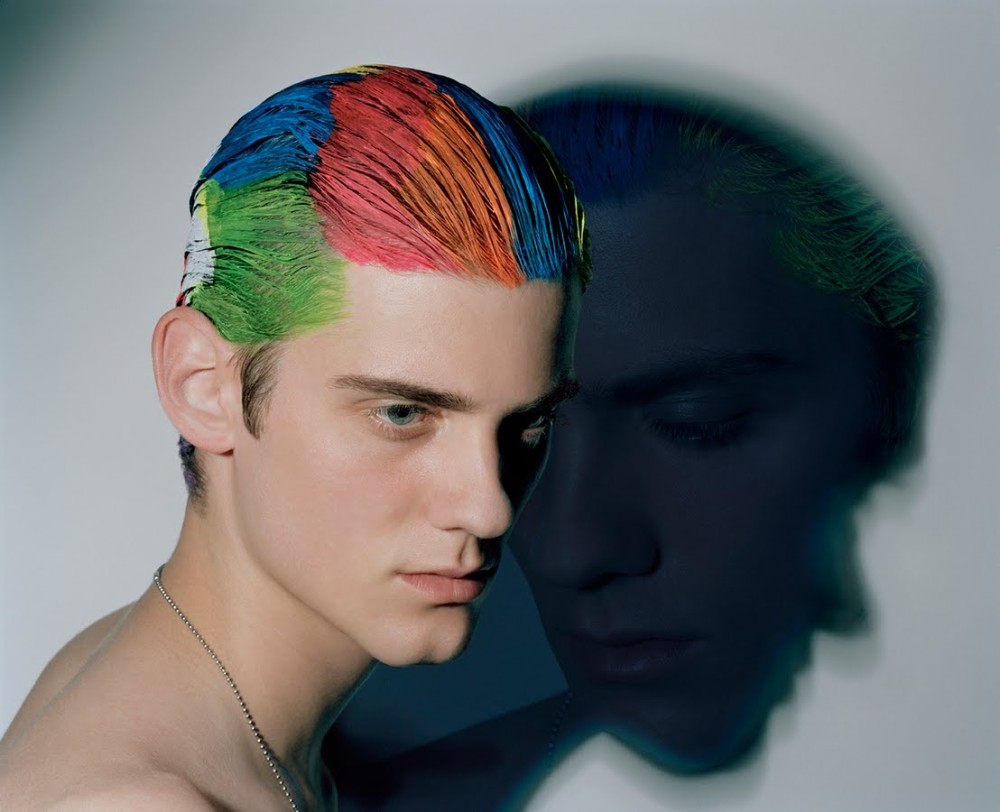
Recent studies have shown that homophobic people may in fact harbor homosexual feelings and therefore respond negatively to homosexuality out of fear of their own emotions and impulses.
I believe that this research can be used to fight bullying of gay kids, teens and young men. Let’s dis-empower the homophobes by playing into their fears.
Follow me for a moment. What is homophobia? Homophobia is negative attitudes and feelings towards homosexuality. What are homophobes? Homophobes are people that possess these negative feelings and attitudes. If we can turn the tables around and put the homo onto the homophobes then perhaps they would be afraid of showing any signs of homophobia? If everybody knew that homophobes were actually closet homosexuals then these homophobes would be hesitant to outwardly bully people based on their sexual preference. Through a public awareness campaign in schools, advertisements and social media we have a possible solution to reduce bullying of young gay teens and men.
I honestly believe that bullying is one of the most challenging issues facing gay youth but it’s also one of the most difficult issues facing educators and parents. Bullying has been around for as long as there have been teenagers and it seems that pockets of teenagers will always pick on others no matter what steps are put in place to try prevent it. The approach I’m suggesting plays into teenagers fears, similar to anti-smoking campaigns play into adults fears i.e “If you smoke, you will get cancer” or for the homophobia example “studies show that people who bully gay kids may be gay themselves”. Now, I don’t mean to associate homosexuality with cancer but teenagers are a simple minded group, they just want to fit in and will do anything to do so. If we can exploit this need to be the same as everyone else then I believe we have the first practical solution to fighting gay bullying.
What do you think is the solution to stopping gay bullying?
(Read this Huffington Post article for more information on the studies of homophobia).
Photo credit: Jean-Francois Carly

He may not play for our team, or any team for that matter (being a golfer) but Adam Scott has certainly made the sport that much more exciting. Today, the 32 year old became the first Australian to win the US Masters when he defeated 2009 champion Angel Cabrera of Argentina.
His good looks and athletic ability have certainly made me interested in golf for the first time since I was given golf clubs for my bar mitzvah when I was 13 years old.

One of the best things about having a boyfriend is choosing not use condoms. I’ve heard from friends of mine that they choose not to use condoms with their boyfriends after a certain period of time dating. They rationalise that they’ve been together for long enough that they can trust their partner but this is a grave mistake. A large portion of newly diagnosed HIV cases are the result of a person contracting the virus from a partner who did not know that they were HIV positive. You cannot assume that your partner is negative simply based on the period of time that you’ve been dating. He may not be aware of his own status.
When and if you decide to stop using condoms in your relationship it’s important to follow the Four T’s: Talk, Test, Test, Trust. This is the safest approach to ensuring you look after your health and the health of your partner.
I have copied the following information from the ACON website (an Australian health organisation established to promote sexual health for the gay community) as they explain the Four T’s best.
Some HIV negative men in ongoing relationships with other HIV negative men choose to have anal sex with each other without using condoms. At best this decision can help make the sex they have special, at worst it can increase the risk of either or both partners contracting HIV.
Choosing not to use condoms with a regular partner is a major decision. It’s not only a decision about the type of sex you have together, it’s a decision about how much responsibility for your sexual wellbeing you’re prepared to hand over to your partner. By choosing to have sex without condoms within your relationship you are saying to each other ‘I trust you with my health and safety’.
THE FOUR T’S
Step One – Talk
To safely stop using condoms within your relationship you need to be able to talk openly and honestly with each other about why you want to do it, what the potential benefits and risks might be, the ground rules for sex inside and outside the relationship and how you’ll deal with any problems that may arise.
If you come to an understanding with each other on all of these issues and still want to ditch the condoms you should then move on to Step #2.
Step Two – Test
Step 2 is for both of you to have an HIV test. You can do this together or separately. If you’re going to have anal sex without a condom you should both be totally sure you are HIV negative and aren’t going to put each other at risk.
If the tests for both of you come back negative, you should still continue to use condoms for 3 months before moving on to Step #3.
Step Three – Test
Step #3 is to get a second HIV test. If neither of you have had unsafe sex throughout the three-month period then the second test will confirm that both of you are HIV negative.
If this is the case and you still want to stop using condoms with each other you can then move on to Step #4.
Step Four – Trust
Step #4 is to negotiate a clear agreement for sex with each other and other people outside the relationship (if that’s what you’ve decided) as well as guidelines for dealing with any problems that might arise. Once these have been made clear you can then trust that you and your partner will stick by them.
If the two of you decide to stop using condoms for anal sex with each other remember it depends upon open and honest communication. The discussions you have about condoms and sex can help you understand each other better and build a stronger relationship
Photo Credit: “Viva Las Vegas” by Matthias Vriens McGrath
How have you negotiated safe-sex with your partner?
Currently fixed on “King of the stars” by Dr Don Don
Sounds like: A psychedelic weekend away
Enjoy while: Dancing around your room naked on a Friday night before you head out

Generally it is estimated that one in ten people is homosexual. I would suggest that this is a safety mechanism, designed by nature to stop gays from destroying each other.
My experience of being around too many gay men at once is rather negative. Before I go any further, I want to stress that I am a strong believer that one’s perspective affects one’s experience so the following observations may not be true for everyone. If that is the case, I would love to hear your thoughts.
It’s best to explore my argument with an example. There’s a local venue in my city that gay men frequent religiously on a Sunday afternoon. This particular venue has become quite the institution and is filled, no matter what the weather conditions may be, with gay men of various ages, persuasions and types. You would imagine that such a gathering would be open and friendly, and offer the potential to meet new people and mingle with old acquaintances. On the contrary. This venue is reminiscent of the school canteen (although everyone is a litter older and buffer). Boys are no less cliquey and judgemental than they were in high school. The lunch tables may be replaced with bar tops and the chocolate milk with $5 ciders but the atmosphere is just the same. It is an atmosphere of arrogance, separation, judgement and suspicion. Everyone may be tightly packed into the huge courtyard space but there is little communication between strangers and no sense of community that previous generations of gay men were known for. And what’s worse, it is as if by osmosis that I too act like one of these guys.
I’m not sure what it is that creates this disconnect between people. I’ve asked myself if perhaps it’s a phenomenon native to my city or if it’s because our communal insecure psyche is so strong when we’re gathered together. Or maybe we’re just inherently more judgemental and superficial than straight people? Whatever the reason may be, I leave the bar on a Sunday night feeling worse than when I arrived (and that has nothing to do with the amount of alcohol I’ve consumed). I promise myself that I wont be back the next week which is actually very disappointing when you think about it. We should be creating spaces that empower each other, that promote community and self-love. There are enough places in the real world where gay guys feel uncomfortable, what a shame it is that we’ve created gay spaces that make us feel the same way.
I was never one to frequent gay venues or to follow the gay social circuit. This was partly because most of my friends were straight and the few gay friends I had didn’t enjoy the “scene”. It was also partly due to the fact that I had lived in this city all my life and had observed the community from a distance, questioning whether I wanted to be a part of it or not. But when so many of my closest friends left me for exotic cities overseas I thought that friendlessness would offer me the opportunity to explore my local gay community. In retrospect, although I now know a lot more gay people than I did 5 years ago, I feel more insecure about myself when I spend time with them and find myself engaging in idol chatter more frequently than I did when hanging out with my straight friends. What’s more is that I haven’t actually made that many meaningful relationships with those guys that I have met. The best gay relationships that I’ve had in the past whether they be with friends, boyfriends or one night stands, were with people that I met outside of typically gay situations. Which makes me wonder “are gay guys in groups toxic?”.
Let me know your thoughts.
Are gay guys in groups toxic?
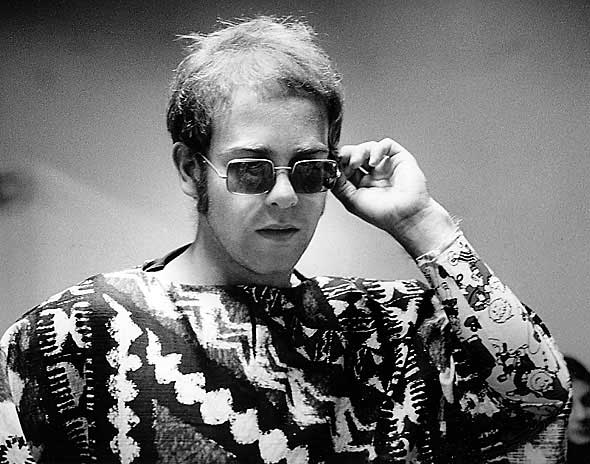
Sir Elton John is perhaps one of the greatest living performers of our times. Beyond the talent, Elton is a generous supporter of HIV and AIDS programs through his charity the Elton John Aids Fund (EJAF). The foundation’s mission is “to reduce the incidence of HIV/AIDS through innovative HIV prevention programs, to eliminate stigma and discrimination associated with HIV/AIDS, and direct treatment, care, and support services for people living with HIV/AIDS” (www.ejaf.org).
I had the great honour of spending the day with Elton John aboard a chartered yacht on Sydney harbour a few months ago. It was the most surreal experience. The breathtaking harbour as a backdrop and a day with Sir Elton, his son and a small circle of friends. We spoke about music and Australia while I sipped on champagne and Elton sipped on Diet Coke. Although the media like to exploit Elton’s “diva” antics, in person he was absolutely charming, friendly and a doting father to his adorable son Zachary.

 THE MODERN GAY GUIDE TO LIFE